
Digital Backbiting: The Hidden Sin in Our Hands
بسم الله الرحمن الرحيم
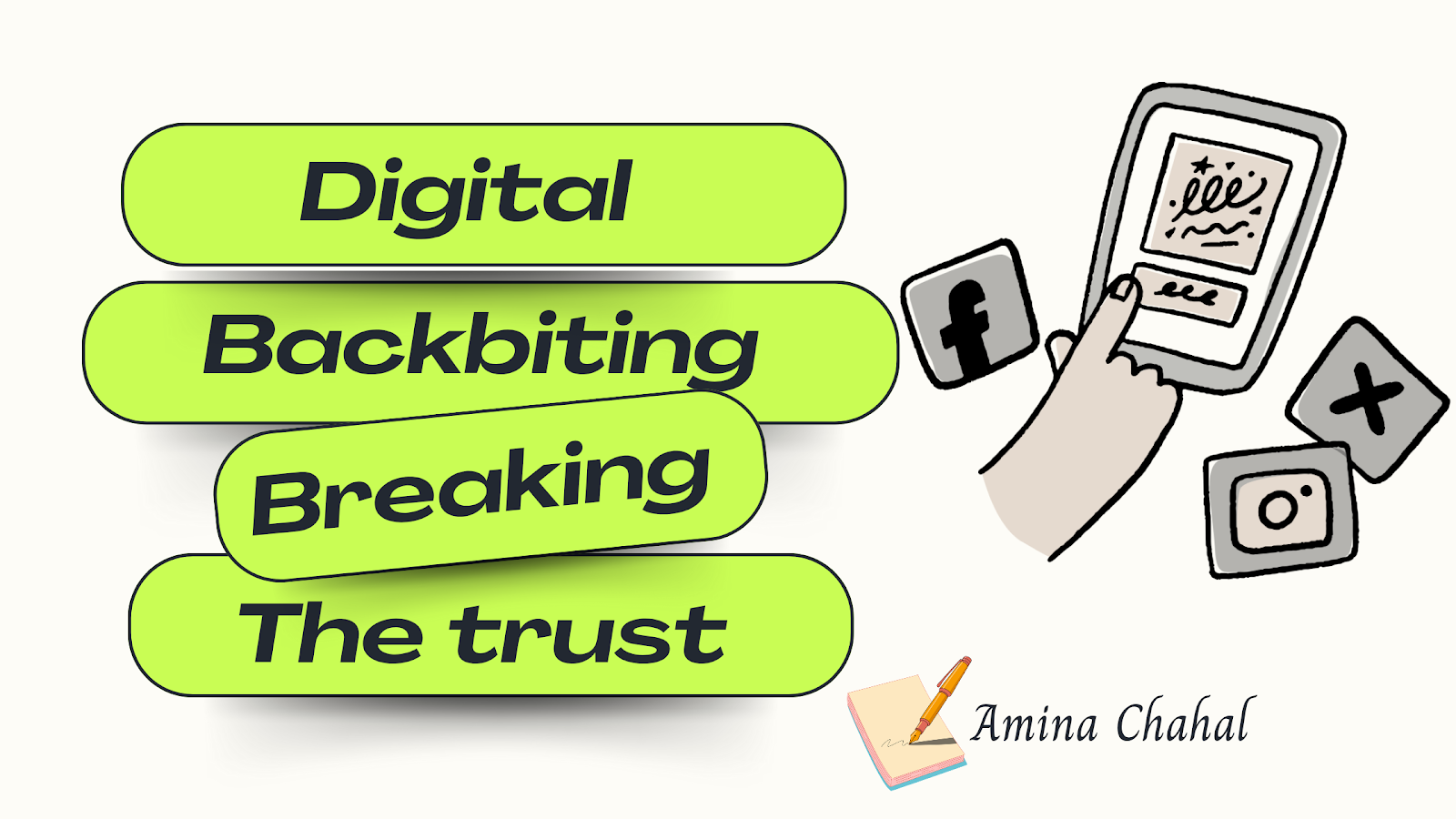
In today’s digital age, our smartphones and social media platforms have become an extension of our daily lives. While these tools allow us to connect, share knowledge, and maintain relationships, they also present a subtle yet dangerous challenge: digital backbiting.
What is Digital Backbiting?
In Islam, backbiting (ghibah) is defined as speaking about someone in a way they dislike, even if it is true. Traditionally, this involved words spoken in private gatherings. Today, the same sin has taken on a new form : online. Commenting negatively about someone on WhatsApp, Facebook, Instagram, or Twitter, and sharing private conversations or screenshots without consent, all fall under digital backbiting.
Sharing Screenshots: A Breach of Amanah
When someone confides in us through a private chat, it is an amanah, a trust. Talking with someone in confidence, sharing secrets, or sending private messages is a responsibility, and betraying it is a serious violation.
Prophet Muhammad ﷺ said:
"There are four qualities, whoever has all of them is a pure hypocrite, and whoever has some of them has a characteristic of hypocrisy until he gives it up: when he is entrusted with something he betrays that trust; when he speaks he lies; when he makes a promise he breaks it, and when he disputes he resorts to lies and falsehood."
[Narrated by al-Bukhari 34; Muslim 58]
Disclosing someone’s private messages or secrets falls under this warning, making it not just a social wrong but a spiritual danger. Betraying trust is a sign of hypocrisy, and one of the gravest sins in Islam.
Allah ta'ala warns us in the Qur’an:
"O you who believe! Avoid much suspicion; indeed some suspicion is sin. And do not spy or backbite each other..."
(Surah Al-Hujurat, 12)
This applies, even online. The platforms and methods may have changed, but the ethics of speech and trust remain the same. Digital backbiting is still a sin, and sharing someone’s private words can be worse because it spreads the matter beyond what the original speaker intended.
Recording the phone calls without consent and then sharing with others is another serious breach of the trust. Sharing these recordings spreads harm, violates privacy, and is considered a form of digital backbiting.
How is it harmful?
Emotional harm: The person whose trust is broken may feel betrayed, humiliated, or anxious.
Social damage: Relationships between friends, family, or colleagues can be strained unnecessarily.
Spiritual consequences: Just like traditional backbiting, digital backbiting accumulates sins and can affect one’s relationship with Allah.
Even a single act of online backbiting can remain as a continuous sin, with its consequences lasting until the Hereafter.
Practical Steps to Avoid Digital Backbiting:
• Pause before forwarding: Ask yourself if sharing this screenshot is necessary and beneficial.
• Seek permission: If it must be shared, get consent from the original person first.
• Avoid private conversations for gossip: Never use chats as a medium for spreading negative information.
• Reflect on your intention: Are you sharing for advice, warning, or just entertainment? Make sure your intention is pure.
• Repent and rectify: If you’ve shared someone’s private messages without permission, seek Allah’s forgiveness and, if possible, apologize to the person.
In Short, digital platforms may make it easier to connect, but they also amplify the consequences of our words. Every screenshot shared without consent, every comment made behind someone’s back, is an act of digital backbiting and a breach of trust. Islam teaches us to protect trust, honor privacy, and speak only what is good or necessary. Betraying a trust is a serious warning in the Qur’an and Sunnah, and even one breach reflects the traits of hypocrisy.
We must follow this noble saying of our beloved Prophet Muhammad ﷺ both online and offline:
“Whoever believes in Allah and the Last Day should speak good or remain silent.”
(Sahih Muslim)
O Allah, make us among those who stay away from backbiting and gossip, whether online or offline. Forgive us for what we have done in the past, and protect our tongues and our secrets. Aamiin!
Barakallahu feekm!
With Duas:
Amina Chahal
More writings
🌸 From Home to Barakah: The Beauty of Halal Earning
✨ Sisters, Your Skills Are More Valuable Than You Think Turn Your Skills into Sadaqah and Sustenance 🌷 I've noticed that many sisters in my contacts from African countries are running small businesses from their homes. In fact, it's rare for me to c
Read the article →
🌙 How to Spend the Last Ten Days of Ramadan Effectively
بسم اللہ الرحمٰن الرحیم Following the Qur’an and Authentic Sunnah The last ten nights of Ramadan are the most precious nights of the year. In them lies Laylat al-Qadr, a night better than a thousand months. The Prophet ﷺ would strive in these night
Read the article →
2.4 Calming the Heart
SEASON ② : REGULATION Emotions • Thoughts • Inner Calm بسم الله الرحمن الرحيم Article 4: Calming the Heart Finding Inner Calm Through Allah Alhamdulillah! Sometimes the heart feels restless. Thoughts move fast. Emotions feel loud. The body feels tig
Read the article →